
 EN

Why recyclable packaging paper lowers end‑of‑life environmental impact
Recyclable packaging paper can lower end-of-life environmental impact, but the useful word here is can. A paper pack is not automatically recovered simply because it looks paper-based. Its outcome depends on material design, the condition in which it is discarded, the collection program available to the recipient, and whether a sorter and mill can handle it. A packaging-paper technical review should start with a clear question rather than a broad green claim: what will happen to this package after its job is complete?
That distinction matters for brands, converters, and buyers choosing packaging paper for retail, e-commerce, gifts, or protective layers. When recyclable packaging paper is designed for a realistic collection and recovery path, it can help keep usable fiber in circulation and reduce the amount of packaging directed to disposal. It does not erase all environmental impacts, and it does not make every paper construction acceptable in every market. It creates a more practical end-of-life option when the details line up.
End-of-life impact begins with the whole packaging system
Recyclability is often treated as a material label, but it is better understood as a system outcome. A recyclable packaging paper design may begin with fiber-based material, but the result is shaped by inks, coatings, adhesives, labels, food residue, moisture, and attached components. It is also shaped by local collection rules. Public recycling guidance commonly advises people to check what their local program accepts before placing an item in a bin, because accepted materials vary by location and facility.
For a procurement team, this changes the discussion. Instead of asking only, “Is this packaging paper recyclable?” ask what the recipient is likely to do, what the local stream commonly accepts, and which design features could make sorting or repulping harder. A plain paper construction may have a clearer route than one combined with foil, plastic film, or a difficult-to-separate window. Appearance is only one part of the picture; the next question is how the material reaches the recovery system.
How recyclable packaging paper can reduce end-of-life burden
When a suitable paper pack is collected and processed, recovered fiber can be used in later paper products. That can reduce the need to send the package directly to landfill or incineration and can extend the useful life of fiber already brought into the packaging system. Recyclable packaging paper therefore supports a circular-material objective: retain material value for another use where infrastructure and material quality allow it.
There is an important boundary. Paper fibers do not retain the same strength indefinitely through repeated recycling, and recovery systems need reasonably clean, sortable feedstock. So the environmental case is not “paper can be recycled forever.” It is that a well-designed, appropriately used paper pack can make recovery more feasible than a construction that local systems cannot sort or process. That is why the actual use case matters more than a generic material claim.
1. Simpler constructions can make sorting easier
A recyclable packaging paper specification should first identify which layers and add-ons are necessary. Decorative treatments can be valuable for presentation, but each should be evaluated against its likely end-of-life effect. A plastic laminate, metallized finish, heavy adhesive application, or mixed-material attachment may change how a facility sees the package. If a feature is needed, the responsible next step is to ask the supplier what material information is available and then assess it against the intended market’s recovery route.
2. Clean, dry recovery conditions matter
Packaging paper used around dry goods, gifts, or clean secondary packs may have a different recovery prospect from material exposed to food, oil, moisture, or product residue. This does not justify a blanket promise about any format; it shows why disposal instructions and pack-out context influence the result. If the paper is mainly used for presentation rather than protection, this comparison is especially relevant: an attractive wrap can still need a simple material construction and clear end-of-use guidance.
3. Local acceptance must be checked
Recyclable packaging paper is only meaningful in practice when the likely collection channel accepts it. Municipal rules, commercial recycling contracts, and regional mill capabilities are not identical. A claim that is appropriate in one selling region may be misleading in another. Before describing packaging paper as recyclable, clarify the supporting documentation and disposal context. This is more than cautious wording: it keeps a sustainability statement useful to the person handling the package.
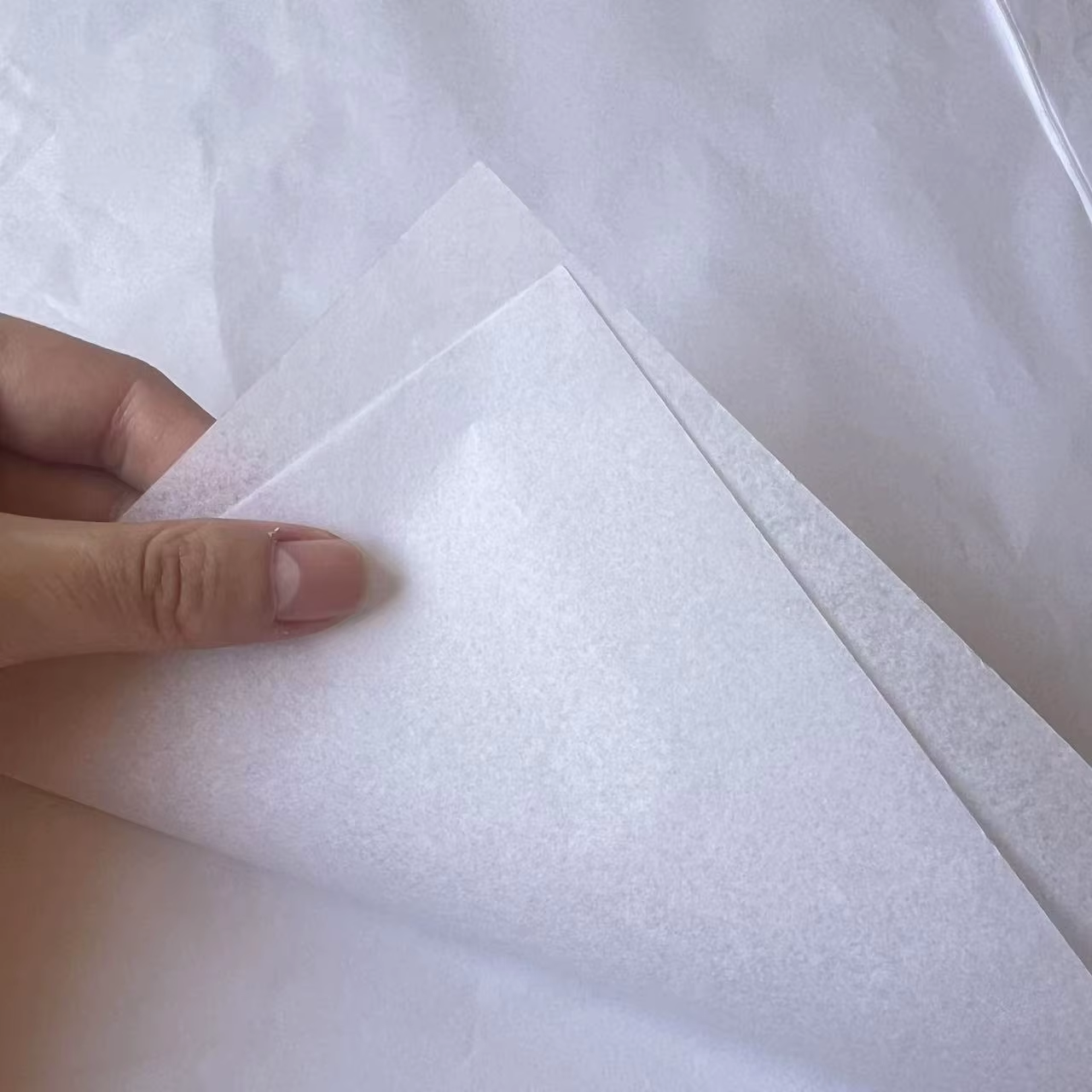 Simple paper constructions can make recovery considerations easier to review.
Design choices that strengthen a recovery path
For many teams, the move from a visual sample to a recovery-aware pack-out starts with a short design review. The following questions can make a recyclable packaging paper brief more specific:
- Is the pack primarily fiber-based, and which coatings, films, labels, tapes, or closures remain attached?
- Will the packaging paper likely stay clean and dry through its intended use?
- What collection systems are available in the markets where the package will be discarded?
- Can non-paper elements be reduced, separated, or designed for easier removal?
- What material documentation, test record, or local-program evidence supports the wording proposed for the pack?
These questions also improve supplier conversations. Rather than asking for a universal “eco-friendly” answer, a buyer can describe the application, print treatment, closure method, sales region, and expected disposal route. The question changes from “what is the price?” to “what format and construction reduce unnecessary material complexity for this use case?” That produces a more useful RFQ and a more defensible final claim.
 Material choices should be checked against the intended disposal context.
Why evidence matters more than a slogan
Brands may want recyclable packaging paper to communicate progress, yet the claim should follow evidence rather than lead it. Before publication, an internal material record, specification, or applicable third-party guidance should be checked for relevance, currency, and scope. Avoid implying that a package is accepted everywhere, that it has a defined carbon outcome, or that a recycling symbol guarantees local recovery. Those conclusions require specific verification.
This approach can still support clear customer communication. Packaging can say what the consumer should do when that instruction is backed by the intended market and pack design. It can also explain separable components where relevant. A concise, accurate instruction is more helpful than an oversized environmental promise because it gives the recipient a practical next step.
A practical end-of-life checklist
Before finalizing recyclable packaging paper, review the complete path: material construction, converting choices, pack-out conditions, disposal markets, and claim evidence. Request samples, inspect attached components, and test the package in the real packing sequence. A tabletop sample is useful, but the next question is whether it works during the intended pack-out sequence and remains suitable for the planned recovery route.
In short, recyclable packaging paper lowers end-of-life environmental impact when it helps create a credible route from use to collection to material recovery. It belongs in a broader decision set, not on its own as a badge. By simplifying where possible, keeping recovery conditions in view, and verifying local acceptance before making claims, packaging teams can make a more grounded choice for both presentation and disposal.