
 EN

Why Clothes Paper Wrap Protects Shoes, Bags, and Apparel During Shipping
When a customer opens a parcel, the condition of the item is judged before the item is worn or used. A clean, well-planned clothes paper wrap layer helps separate soft goods from one another, keeps surfaces from rubbing during handling, and makes the pack-out easier for a warehouse team to repeat. It is not the whole shipping system. The mailer or bag, cushioning, carton, and closure still carry important jobs. Yet for shoes, bags, and apparel, clothes paper wrap is often the first layer that touches the product, so it deserves deliberate selection.
From a packaging-procurement viewpoint, the useful question is not whether one sheet of paper can handle every transport hazard. It cannot. The better question is how clothes paper wrap fits into a layered pack-out that manages contact marks, fold lines, loose hardware, and presentation from the packing bench to the customer.
What clothes paper wrap does inside a shipping pack
Clothes paper wrap creates a low-bulk separation layer. When fabric, coated leather, hardware, or printed surfaces move against adjacent items, friction can leave rub marks, transfer color, or disturb a carefully folded garment. A sheet placed between contact points reduces direct item-to-item contact. The same sheet can hold a fold in position while a garment is placed into a protective bag or carton.
That role matters because products face different forces at different stages. At the bench, an item may be stacked. In a delivery network, a parcel may be tilted, compressed, or shifted. Clothes paper wrap does not turn a flexible paper layer into impact cushioning, but it can keep the product arrangement tidier so the outer pack can work as intended.
- Surface separation: paper between two delicate faces limits rubbing during packing and unpacking.
- Fold control: a light sheet can support intentional folds rather than letting fabric edges press into each other.
- Void management: loosely folded paper may help hold a small item in place, where the amount and grade are appropriate.
- Presentation: a clean inner layer signals care without needing a complicated unpacking sequence.
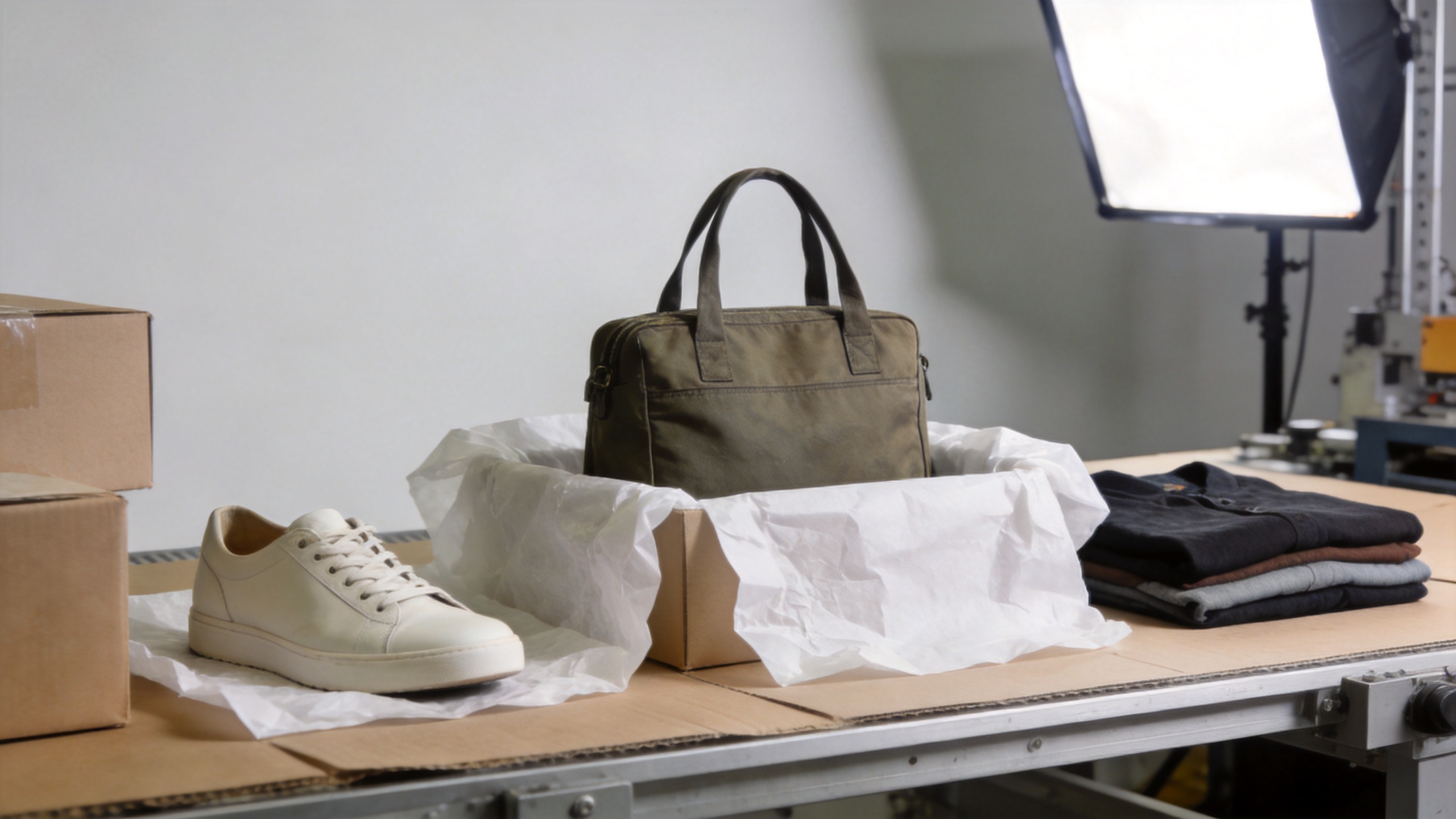
Why shoes benefit from a planned paper layer
Shoes combine materials that behave differently in transit: uppers can scuff, laces can snag, metal trims can contact neighboring surfaces, and the toe area can lose its intended form if it is left unsupported. A clothes paper wrap routine can separate each shoe, cover visible finishes, and provide a light internal fill where the shoe design calls for it.
For a pair, start with clean, dry shoes. Place a paper layer around each shoe rather than allowing the two uppers to face each other directly. If the style has buckles, chains, or other projecting details, isolate that detail with an extra fold of clothes paper wrap before the shoes go into a bag or box. For structured footwear, use the paper as a form-supporting fill only when it does not strain seams or distort the vamp.
Then choose the outer pack for the shipping lane. A close-fitting shoe box inside a right-sized carton may need less movement control than a soft mailer. Paper wrap helps organize the interior, while the appropriate outer container and cushioning handle compression and impact exposure.
How to wrap bags without trapping damaging contact points
Bags bring a different set of contact risks. Handles, straps, hardware, and corners can press into the bag body or an adjacent item. For this category, clothes paper wrap is useful as a barrier between hardware and finished panels. It can also keep a strap from crossing a decorative surface during the journey.
Use a simple sequence: empty the bag of loose packing debris, place a smooth sheet against the most visible panel, isolate hardware with a separate piece, and lightly shape the interior if the bag needs support. Avoid tightly compressing the bag with too much paper. The goal is stable placement, not a rigid paper plug. A soft bag still needs a moisture-resistant inner bag and an outer package suited to its weight and route.
Color and print choices also need a sample check. If colored clothes paper wrap will touch light-colored materials, buyers should evaluate color transfer under the actual packing and handling conditions. Clean handling, dry materials, and a tested pack-out are more useful than assuming every decorative sheet behaves the same way.
Apparel: combine clothes wrapping paper with consistent folding
For apparel, clothes wrapping paper is most effective when it follows a consistent folding routine. Lay the garment flat, smooth the major panels, and place paper at areas where layers would otherwise rub or create a pronounced fold. A sheet across a printed front, a delicate embellishment, or a dark-to-light fabric contact point may be appropriate after a packing trial.
Clothes paper wrap can also make multiple-piece orders easier to sort. Wrap each folded unit or set before it enters the shared outer package, then use a divider or light cushioning where the carton has unused space. This gives packers a repeatable sequence and helps the recipient identify separate items without pulling the entire parcel apart.
There is an important limit: ordinary tissue-style paper is not a moisture barrier. If a route or storage condition calls for moisture resistance, use a suitable protective bag or other verified barrier layer around the wrapped garment. Clothes paper wrap belongs on the product-facing side of that system, not in place of it.
Choose paper by the job it must perform
Not every order needs the same paper weight, format, or finish. Select clothes paper wrap after looking at the product surface, pack speed, color contact, and outer-pack design. A very light sheet may be enough for separating clean folded knitwear, while a bag with exposed metal hardware may need a more deliberate barrier arrangement. In either case, run a packing sample before committing to a large order.
| Pack-out question | What to check |
|---|---|
| Which faces touch? | Map panels, trims, or hardware that could rub during movement. |
| Does the item need shape support? | Use a light fill only where it supports the intended form without stressing the item. |
| Could color contact matter? | Test colored sheets against light materials in the actual pack-out. |
| What handles moisture and impact? | Specify the separate bag, cushioning, and outer carton for the route. |
A repeatable shipping checklist
- Inspect the product for loose parts, dry surfaces, and sensitive contact areas.
- Apply clothes paper wrap where it separates surfaces, supports a fold, or isolates hardware.
- Use a moisture-resistant inner layer when the product or route requires one.
- Control movement with suitable cushioning and an outer package sized for the item.
- Review a shipped sample for scuffs, color contact, fold marks, and unpacking clarity.
The practical value of clothes paper wrap comes from using it for a specific job rather than treating it as a catch-all solution. When paired with the right bag, cushioning, and carton, a measured paper layer can support surface care, orderly handling, and a more considered opening experience for shoes, bags, and apparel.