
 EN

How clothes paper wrap prevents garment dust and abrasion
For an apparel packer, clothes paper wrap is not simply a finishing touch. Used well, it creates a clean, low-contact layer between a garment, its folds, and the rest of the pack. That separation can reduce surface scuffing, keep dust away from the folded item, and make the parcel feel orderly when opened. From a packaging-paper technical advisor’s perspective, the useful question is not whether one sheet can solve every transit problem. It is how the paper, fold pattern, outer package, and handling routine work together.
A clothes paper wrap layer is especially practical for shirts, knitwear, lingerie, accessories, and other items whose finish can be disturbed by repeated contact. It is also useful in a boutique or e-commerce workflow where presentation matters. The boundary is important: wrapping paper can manage contact and cleanliness inside a pack, but it does not replace a properly sized mailer, carton, moisture barrier, or careful carrier handling.
Why clothes paper wrap creates useful garment separation
Garments move more than expected after they leave the packing table. A folded cuff may rub against a button, a zipper pull, a hangtag, or the textured surface of another item. In a multi-piece shipment, fabric-to-fabric contact can also transfer lint or let decorative details catch. A thin, smooth paper layer breaks up those contact points. Rather than choosing a paper by color first, clarify whether it will line a fold, wrap a finished garment, separate stacked pieces, or create a clean presentation layer.
That is the appearance side. The next question is how the material reaches the packing table. For small orders, pre-cut sheets can make a repeatable routine easier: place one sheet under the garment, fold with another sheet at the areas most likely to rub, then wrap loosely enough that the item is not compressed. For high-volume work, the same sequence should be tested at packing speed before it becomes a standard.
How clothes paper wrap limits dust exposure
Dust protection is mainly about reducing direct exposure during the time between folding and opening. When a garment is wrapped before it goes into its outer package, the wrap forms an inner boundary around the fabric. It can help keep loose paper fibers, carton dust, and incidental handling debris off the visible surface. A clothes paper wrap is most effective when the garment is folded on a clean table and moved promptly into a clean outer mailer or box.
Paper alone is not a sealed barrier. If a shipment may face rain, condensation, or a wet loading area, assess the outer packaging separately. If the garment has a delicate finish, light color, or long storage period, request and review the relevant paper specification or sample. That self-correction matters: clean-looking tissue is not automatically suitable for every fabric or storage condition.
How clothes paper wrap reduces abrasion at folds and trims
Abrasion happens where two surfaces rub under movement or pressure. The practical role of clothes paper wrap is to introduce a sacrificial, low-contact layer in those places. The wrap can sit between a folded sleeve and the body of a shirt, between stacked garments, or between a decorative trim and adjacent fabric. It does not make friction disappear; it reduces direct fabric-on-fabric or fabric-on-hardware contact while the parcel is handled.
Start with the risk points, not a generic material claim. Look for rough embroidery, buttons, metal hardware, screen prints, sequins, or bulky seams. If the item is prone to a sharp crease, use a larger, relaxed fold and place paper at the bend rather than pulling the garment tightly around it. Tissue can help organize a garment around a planned fold, but it should not be treated as a guarantee against wrinkles. Carton depth, pack density, and handling still decide how much compression the order experiences.
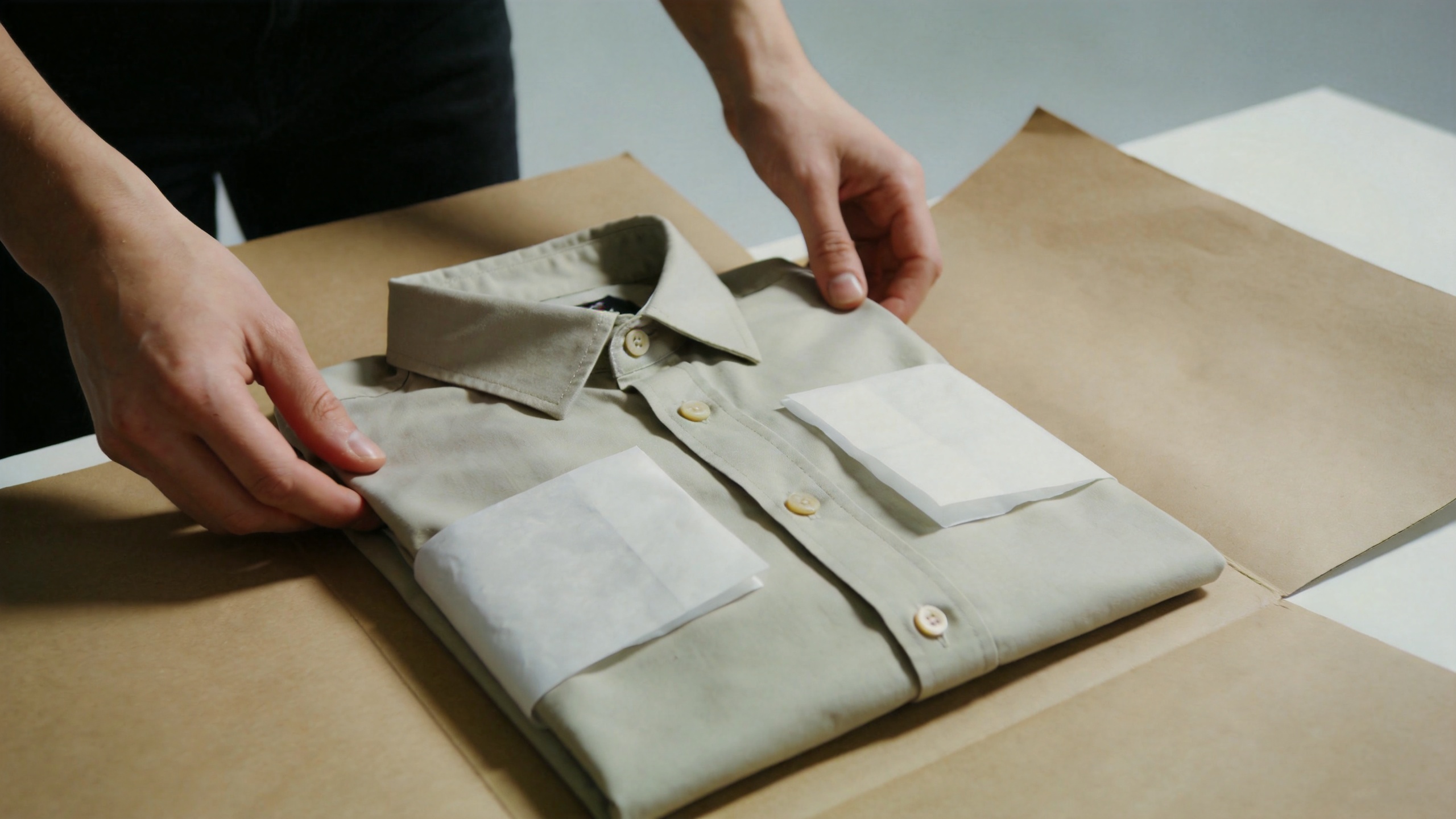
A practical clothes paper wrap workflow
- Prepare a clean clothes paper wrap station. Remove loose labels, offcuts, and abrasive debris before the garment is unfolded.
- Check the garment’s contact points. Identify trims, prints, closures, and areas where layers will meet after folding.
- Choose a clothes paper wrap sheet size that supports the fold. The sheet should separate surfaces without requiring the packer to bunch or over-tighten the paper.
- Place clothes paper wrap where contact is likely. Use a base sheet, interleave folded layers when necessary, and add a top sheet before closing the outer package.
- Match the outer pack to the order. Leave enough room to avoid crushing, and add moisture protection only where the delivery route and product requirement call for it.
- Run a clothes paper wrap handling check. Pack several representative garments, then inspect folds, trims, and visible surfaces after normal table handling and a short movement test.
For apparel teams, this approach turns clothes wrapping paper into a controlled packing step rather than a decorative afterthought. A documented clothes paper wrap sequence also makes training easier: every packer can use the same base sheet, interleave the same risk points, and close the same outer pack. It helps distinguish a one-piece gift presentation from an order that needs reliable repeatability across many SKUs.
Choosing clothes paper wrap for the actual use case
| Use case | What the paper should do | What still needs separate confirmation |
|---|---|---|
| Boutique presentation | Create a clean visual layer and separate folded surfaces. | Colorfastness and any print-transfer risk for the specific paper and garment. |
| E-commerce single-garment order | Limit direct contact with the outer pack and keep the folded item orderly. | Mailer or carton sizing, weather exposure, and transport compression. |
| Multi-item apparel order | Interleave pieces so trims and finishes are less likely to rub together. | Pack density and whether accessories require additional protection. |
| Longer textile storage | Separate layers and support folds with an appropriate paper specification. | Paper chemistry, fabric sensitivity, storage climate, and archival requirements. |
For long-term textile or costume storage, conservation guidance is more specific than ordinary parcel packing. The Smithsonian Museum Conservation Institute notes that neutral-pH, unbuffered acid-free tissue can be appropriate for general textile or costume storage, with light paper often used for that purpose. That is useful context, not a blanket product claim: a buyer should verify the paper specification and the garment’s needs before applying archival language to a commercial pack-out.
Common clothes paper wrap mistakes that weaken protection
- Wrapping too tightly: tension can set folds and press trims into the fabric.
- Using paper as the only shipping protection: it cannot compensate for an oversized box, poor void control, or moisture exposure.
- Ignoring transfer risk: confirm suitability when colored paper, wet conditions, light fabrics, or sensitive prints are involved.
- Adding paper without a repeatable method: inconsistent placement leaves some garments protected and others exposed.
- Assuming every tissue is archival: long-term storage needs a separate material and environmental review.
Questions to ask before standardizing clothes paper wrap
Before placing a regular order, ask for a sample and test it with the actual garment, fold style, label, and outer pack. Confirm the required sheet or roll format, the preferred color, whether the paper contacts light or dark fabrics, and whether the order will be stored or shipped immediately. Put the focus on the workflow: the relevant question is not only how the paper looks, but how it behaves in the packing routine.
Putian C&Q Paper Co., Ltd. supplies white, colored, and food-grade tissue paper for packaging, decorative, and filling applications. For a garment project, a productive supplier conversation starts with the use case and the sample requirements rather than an unsupported promise of universal protection. When the sheet, fold, and outer pack fit together, clothes paper wrap can help garments arrive cleaner, better separated, and more carefully presented.