
 EN
EN
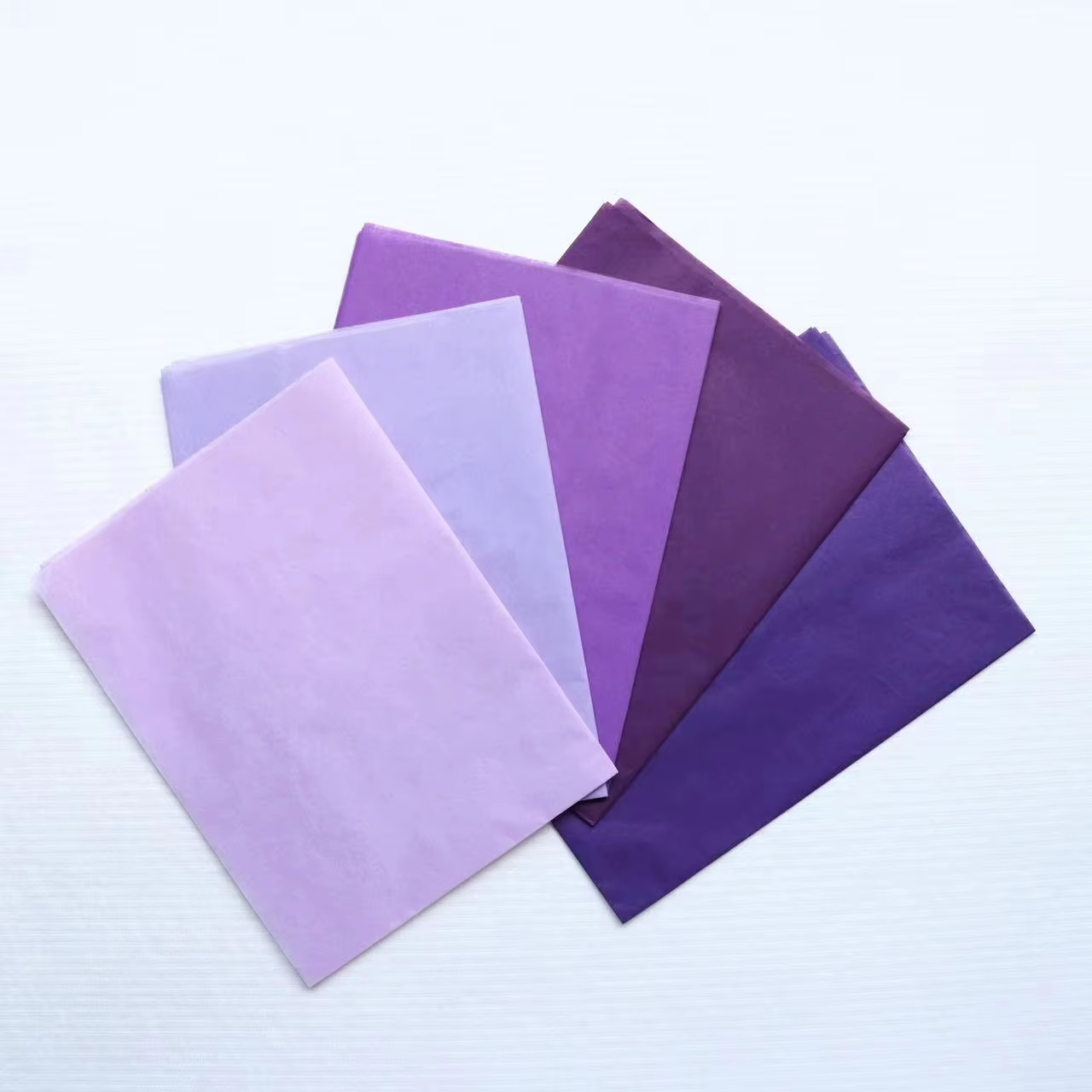
Why True Pantone Matching Matters for Custom Colored Tissue Paper
Protecting brand equity with color-accurate colored tissue paper in luxury and gifting packaging
In luxury packaging and gifting, a brand’s signature shade is more than a color—it is a silent ambassador. When that shade appears on colored tissue paper, even a slight shift can dilute brand recognition and erode trust. High-end retailers invest heavily in consistent presentation: customers expect the same deep crimson or soft blush that first attracted them. A mismatch between the printed tissue and the brand’s official Pantone code signals carelessness, potentially devaluing the unboxing experience. Consistent color accuracy reinforces premium positioning and reassures buyers that every detail matters. For gifting—where packaging often outlives the product—true Pantone matching transforms tissue paper from disposable wrap into a lasting brand asset.
Why CMYK and RGB conversions fail on absorbent tissue substrates
Most digital designs start as RGB or CMYK files, but these color models cannot reproduce accurately on highly absorbent tissue paper. CMYK relies on overlapping cyan, magenta, yellow, and black dots to simulate hues; on porous tissue, ink spreads unpredictably, causing muddy tones and fading. RGB is an additive light model designed for screens—not physical substrates—and direct conversion to CMYK sacrifices vibrancy and precision. Pantone (PMS) spot inks avoid these pitfalls entirely: they are pre-mixed, applied as solid layers, and engineered to resist absorption-related distortion. The table below illustrates why Pantone remains the only reliable standard for luxury tissue:
| Color Model | Suitability for Tissue Paper | Key Issue |
|---|---|---|
| CMYK | Poor | Ink dot gain on fibers shifts final hue |
| RGB | Not printable directly | Requires conversion; brightness lost |
| Pantone (PMS) | Excellent | Pre-mixed, spot color resists absorption |
How Exact Pantone Matching Is Achieved on Colored Tissue Paper
Tissue-specific color formulation: Why Solid Coated ≠ Tissue—and how fiber, caliper, and humidity affect hue fidelity
Achieving true Pantone matching on colored tissue paper demands substrate-specific formulation—not just ink selection. Unlike rigid, coated papers, tissue’s porous structure absorbs inks differently, leading to significant hue shifts if standard PMS formulations are used without adaptation. Fiber density affects saturation: looser weaves allow deeper ink penetration, darkening tones, while tighter fibers alter light reflection. Caliper (thickness) modulates perceived vibrancy—thinner sheets appear translucent, reducing contrast. Humidity introduces another variable: moisture causes paper expansion and subtle fiber realignment, triggering metameric shifts where colors change under different lighting. These factors require lab testing using spectrophotometers calibrated for porous materials. Leading manufacturers adjust ink viscosity, opacity, and drying profiles to match absorption rates—ensuring Delta E ≤ 2.0 across production batches. Without this tailored approach, even certified PMS inks risk inconsistency in luxury packaging applications.
The Verified Production Workflow for PMS-Compliant Colored Tissue Paper
Step-by-step physical swatch validation under D65 lighting and controlled ink sampling
Digital proofs are inherently unreliable for tissue due to its absorbency and fiber variability. True Pantone fidelity requires hands-on, physical validation. Suppliers must produce test swatches printed on the exact tissue stock—accounting for caliper, fiber composition, and ambient humidity—and evaluate them under D65 lighting, which replicates natural daylight and eliminates metamerism. This step confirms that the base tissue tone and ink interaction deliver the target hue before full-scale production begins. It is the only way to verify visual consistency across real-world conditions.
Delta E ≤ 1.5 certification across production runs (ASTM D2244) for consistent colored tissue paper
After swatch approval, certified suppliers apply ASTM D2244—a globally recognized standard for color difference measurement—to quantify accuracy throughout production. Using calibrated spectrophotometers, they monitor Delta E (ΔE) in real time, targeting ≤ 1.5: the threshold at which variation becomes imperceptible to the human eye. Continuous measurement accounts for tissue-specific variables like fiber settling and moisture fluctuations. Each production batch receives formal certification, ensuring your custom colored tissue paper remains visually identical across orders—protecting brand integrity at scale.
Choosing a Reliable Supplier for Custom Colored Tissue Paper
Selecting a supplier with specialized expertise in tissue paper production and Pantone color matching is essential for brand consistency. Prioritize vendors that provide Delta E ≤ 1.5 certification per ASTM D2244 and offer physical swatches validated under D65 lighting—not just digital simulations. Evaluate their material quality, sustainability credentials (e.g., FSC® or SFI® certification), and capacity to meet your volume and lead-time requirements. A trusted partner delivers technically precise, on-schedule custom colored tissue paper—and provides responsive, knowledgeable support for complex projects.
FAQ
Why is Pantone matching important for branded packaging?
Pantone matching ensures color consistency, which reinforces brand identity and creates a premium experience for luxury packaging applications.
Why can’t CMYK or RGB deliver accurate colors on tissue paper?
CMYK and RGB are not suitable for tissue paper because they cannot handle absorbency and fiber variability, resulting in inaccurate and inconsistent hues.
How does tissue paper substrate affect Pantone matching?
Tissue paper’s porous structure, fiber density, caliper, and humidity impact ink absorption and hue, requiring precise adjustments to achieve matching colors.
What is Delta E, and why is it important?
Delta E measures color difference. A Delta E ≤ 1.5 ensures color consistency across production, maintaining brand standards and customer trust.
What should I consider when choosing a supplier for custom tissue paper?
Look for a supplier with expertise in tissue manufacturing, Delta E ≤ 1.5 certification, physical swatch testing, sustainability credentials, and the capacity to meet your needs.